How Does the Rehabilitation Process Progress After Stroke?
Stroke rehabilitation typically begins with a comprehensive clinical assessment and continues with the development of a personalized therapy plan based on the patient’s functional status and goals. The overall aim of the process is to regain safe movement, improve balance and walking ability, support upper extremity functions, and gradually increase independence in daily life activities.
Rehabilitation programs are generally built on early mobilization, the principle of intensive repetition, and regular clinical follow-up. The program may include multidisciplinary approaches such as physiotherapy, occupational therapy, speech therapy, and swallowing therapy, and it is periodically reassessed and updated according to the patient’s progress.
Quick Answers About Stroke Rehabilitation
When should stroke rehabilitation begin?
Rehabilitation can usually begin early once the patient’s vital signs are stabilized and medical conditions allow. The timing and intensity are determined individually according to the patient’s clinical status.
Who is suitable for robotic rehabilitation?
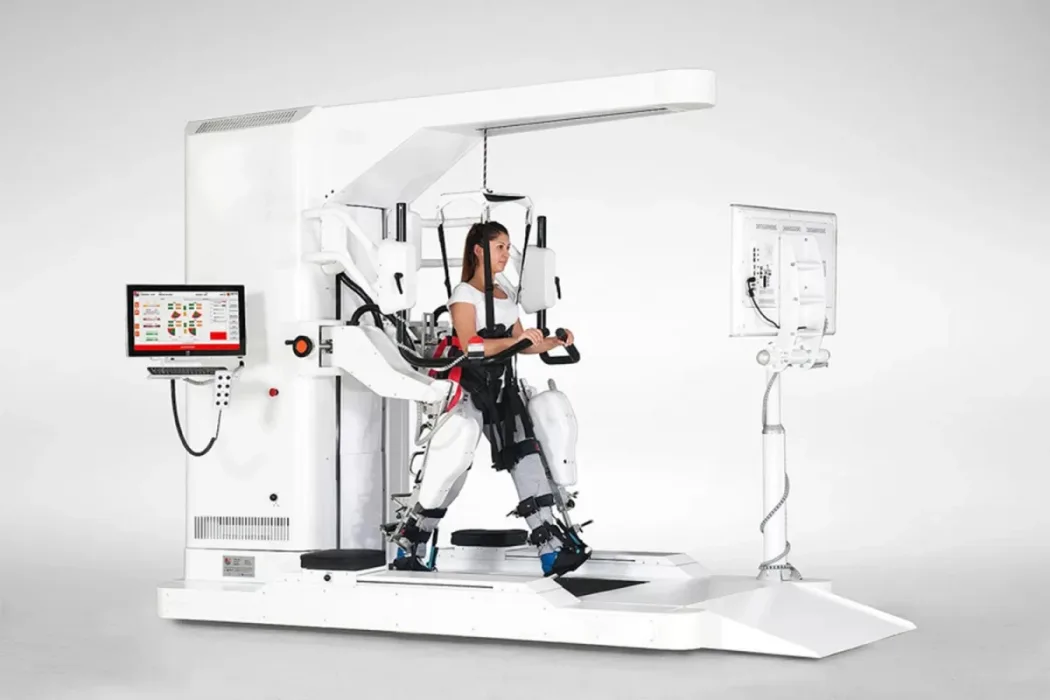
Robotic rehabilitation may be a supportive method for individuals who have goals related to walking, balance, or arm function and who can benefit from repetitive and intensive training. Suitability should always be determined through clinical evaluation.
What Is Stroke Rehabilitation?
Stroke rehabilitation is a personalized treatment process designed to minimize muscle weakness in the arms, legs, and trunk, as well as balance problems, speech and swallowing difficulties, and limitations in daily living activities that occur after stroke.
The aim of rehabilitation is not only to increase muscle strength but also to:
- Support the brain’s capacity for relearning (neuroplasticity)
- Increase the individual’s independence
- Help the patient reach the highest possible functional level in daily life
- Improve overall quality of life
Stroke rehabilitation requires a multidisciplinary approach including physiotherapy, occupational therapy, speech and swallowing therapy, and when necessary psychosocial support.
Why Is Stroke Rehabilitation Important?
Functional impairments that occur after stroke can directly affect a person’s participation in daily activities and independence. The main goal of rehabilitation is to support safe movement, functional abilities, and sustainable independence in daily life. A personalized and consistently maintained rehabilitation program allows treatment goals to be updated over time and progress to continue.
How Long Does Stroke Rehabilitation Take?
There is no single answer to this question because every stroke and every patient is different. The duration of rehabilitation may vary depending on the severity of the stroke, the areas affected, accompanying medical conditions, and the patient’s level of participation in therapy.
Acute phase (first week)
This is the period in which recovery may occur most rapidly. Controlled early mobilization, bed-based exercises, sitting balance training, and transfer activities are emphasized. If medically appropriate, robot-assisted therapies may also be used during this stage.
Subacute phase (first 3–6 months)
Recovery continues rapidly during this phase. Walking, balance, upper limb functions, and daily living activities are intensively practiced. When appropriate, rehabilitation can be supported with robotic technologies.
Chronic phase (after 6 months)
Although recovery may slow compared with the acute and subacute phases, improvement can still continue. With the support of robot-assisted treatments and high-intensity targeted rehabilitation, further functional gains remain possible.
Rehabilitation is not a process that ends within a fixed period. However, starting rehabilitation early always improves the chances of recovery. Goals may change over time and treatment approaches are updated accordingly.
Home Rehabilitation or Rehabilitation Center?
This decision should be made according to the patient’s condition. Choosing between home-based rehabilitation and center-based rehabilitation depends on mobility level, therapy goals, safety, accessibility, and equipment needs.
Home rehabilitation
- Patients who are severely affected and have very limited mobility
- Individuals with transportation difficulties
- Early-stage supportive therapy
However, home rehabilitation is often limited in terms of equipment availability and therapy variety.
Center-based rehabilitation
- Patients who require intensive and structured therapy
- Individuals with walking, balance, or upper limb rehabilitation goals
- Patients who may benefit from robotic and technological rehabilitation support
In many cases, the most effective approach is a combination of center-based therapy and a structured home exercise program.
Does Robotic Rehabilitation Really Work?
Short answer: In the right patient, at the right time → yes.
Robotic rehabilitation can:
- Provide repetitive and standardized movements
- Enable high-intensity exercise
- Increase the patient’s active participation
- Offer measurable performance data
However, an important point should be emphasized: robotic systems are not a miracle solution on their own. Robotic therapy should always be integrated with functional exercises and clinical decision-making processes.
Which Method Is Suitable for Which Patient?
There is no single rehabilitation method that fits every stroke patient. The most appropriate approach is determined by evaluating the patient’s neurological condition, goals, and living circumstances together.
| Patient Profile | Clinical Characteristics | Primary Goal | Appropriate Rehabilitation Method | Expected Outcome |
|---|---|---|---|---|
| Early phase – severely affected patient | Bed-dependent, poor sitting balance, significant weakness in the arm, hand, and leg | Prevent complications, prepare for verticalization (assisted standing), initiate early neuroplasticity in the arm |
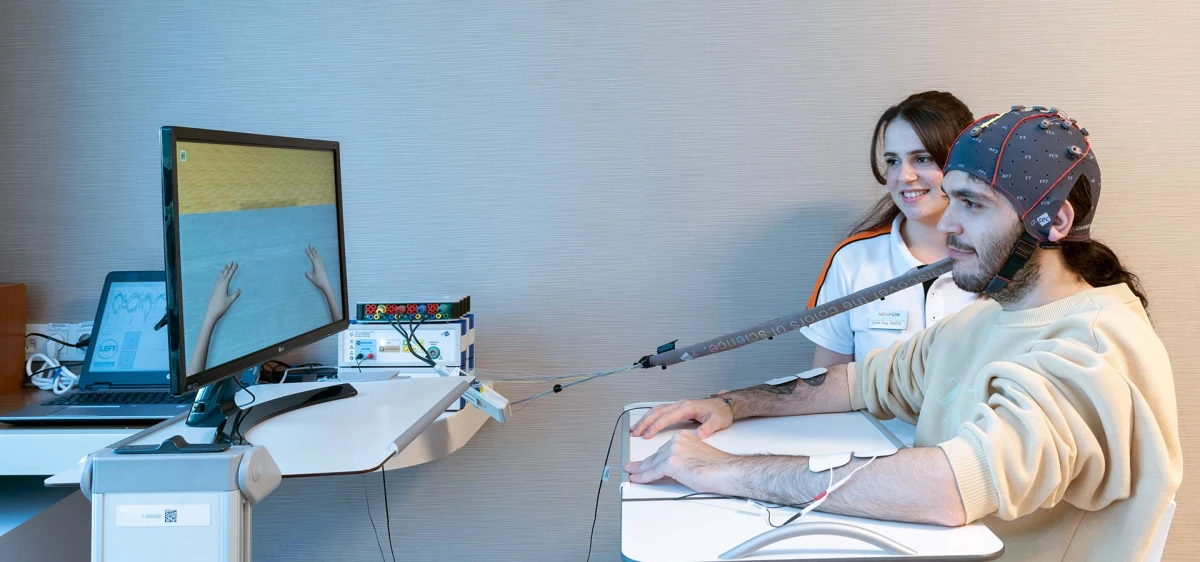
Bed mobility exercises, positioning, assisted sitting, tilt table or robotic rehabilitation table, electrotherapy If cooperation is good → Mirror therapy, motor imagery, brain-computer interface (recoveriX), robotic glove (Syrebo), Amadeo, Diego If cooperation is limited → Robotic glove (Syrebo) |
Independent sitting balance and preparation for standing, initiation of active arm and hand movement |
| Moderate arm-hand and leg impairment with good cooperation | Able to sit, able to stand or walk with assistance, minimal movement present in arm and hand but not functional | Achieve functional movement and independent walking | Task-oriented exercises, balance and gait training, occupational therapy, mirror therapy, motor imagery, brain-computer interface (recoveriX), robotic glove (Syrebo), Amadeo, Diego, Pablo, Myro, Tymo, Lexo, Omego | Improved independence in daily life |
| Patient with walking goals | Able to stand but posture symmetry is impaired, balance problems and fear of falling | Safe and efficient walking | Conventional balance training, lower limb and ankle strengthening exercises, occupational therapy, Lexo, Omego, Tymo, TheraSponge | More balanced and longer-distance walking ability |
| Patient with significant arm-hand function loss | Walking ability relatively preserved but severe limitations in arm and hand use | Integration of arm and hand function into daily life | Task-oriented arm and hand exercises, mirror therapy, motor imagery, brain-computer interface (recoveriX), robotic glove (Syrebo), Amadeo, Diego, Pablo, Myro | Improved grasping, releasing, bimanual use, and daily activity participation |
Common Misconceptions in Stroke Rehabilitation
- Myth: “Patients should not move early after stroke.”
Fact: If medically stable, stroke patients can be mobilized early, often within the first 24 hours.- Reduces pulmonary complications
- Improves circulation
- Supports early neuroplasticity
- Myth: “If the arm does not move, therapy will not work.”
Fact:- Mirror therapy
- Motor imagery
- Electrotherapy
- Brain-computer interface (recoveriX)
- Robotic glove (Syrebo)
- Robotic arm and hand rehabilitation systems (Amadeo, Diego, Pablo, Myro)
- Myth: “Robotic rehabilitation can be applied to every patient.”
Fact: Robotic rehabilitation is effective in appropriate patients. It may not be suitable for individuals who are medically unstable or who have severe pain or advanced joint limitations. - Myth: “Once the patient starts walking, rehabilitation is finished.”
Fact:- Fall risk may still remain
- Energy expenditure during walking may be high
- Long-distance walking may still be difficult
- Myth: “Recovery stops after 6 months.”
Fact:- Walking speed may still improve
- Hand function may continue to develop
- Independence in daily life may increase
Evaluation and Planning
The rehabilitation plan after stroke is structured individually according to the patient’s current functional level, short- and long-term goals, and required therapy components. With regular follow-up, treatment goals are updated and the program is revised according to the patient’s progress.