What Is Mirror Therapy After Stroke?
A Rehabilitation Method That Helps the Brain Relearn Movement
Difficulty with arm movement after stroke is often not only related to muscle strength but also to the brain’s need to reorganize movement. The goal of rehabilitation is not merely to strengthen muscles; the main objective is to support the brain in relearning movement. Mirror therapy is a simple yet scientifically grounded rehabilitation approach that supports this process.
What Is Mirror Therapy?
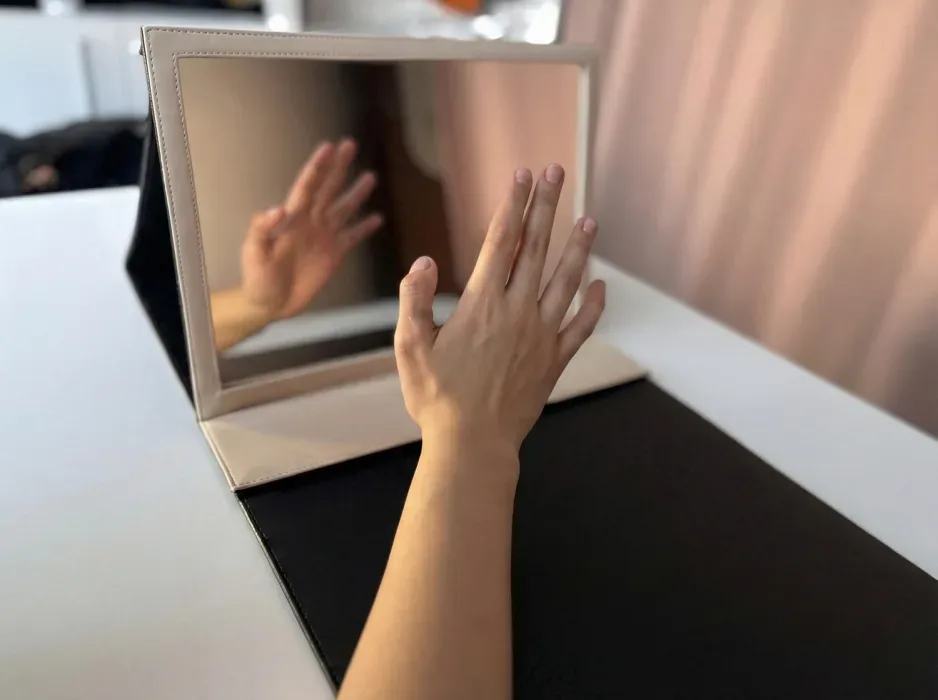
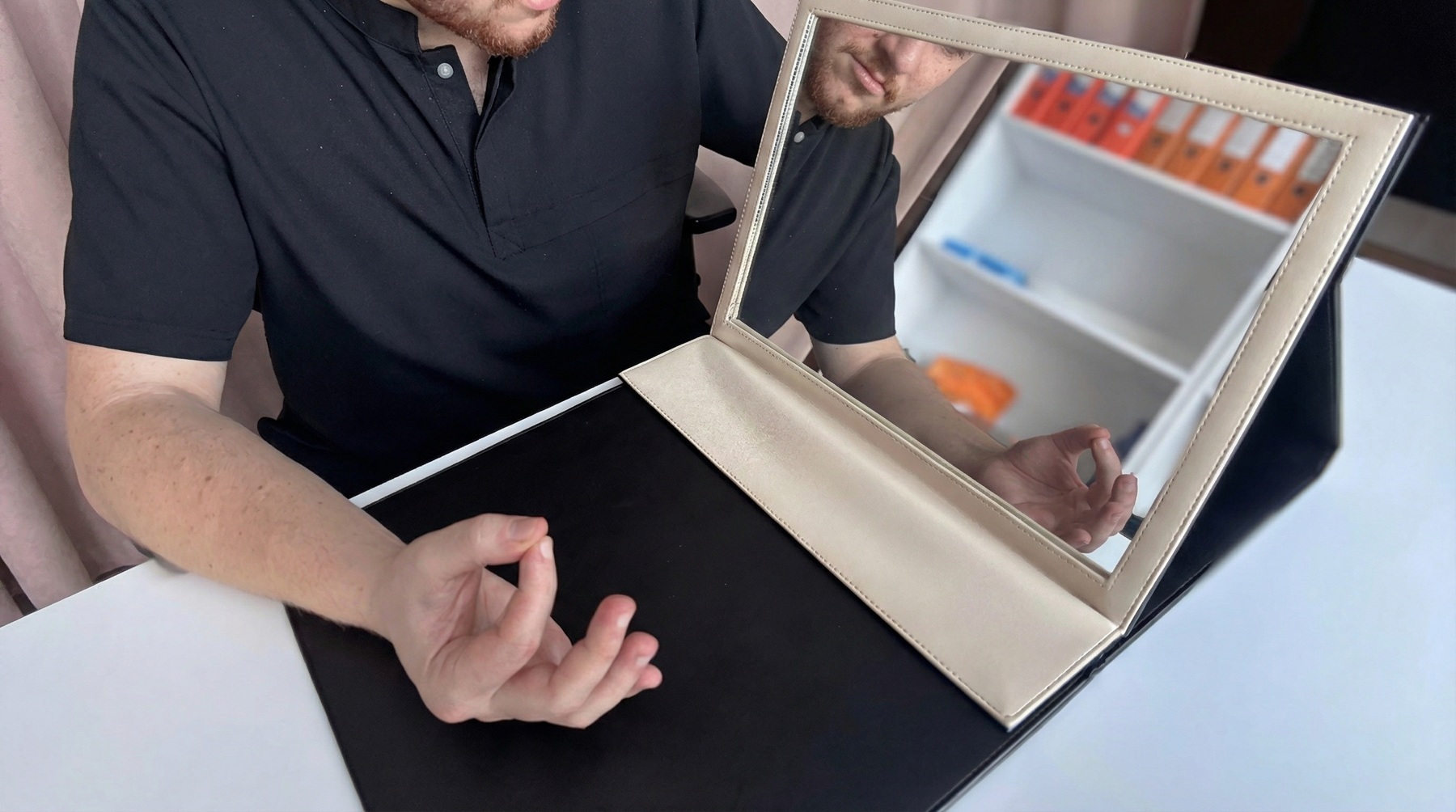
Mirror therapy is based on creating the illusion that the affected arm is moving by reflecting the healthy arm in a mirror. When the individual moves the healthy arm, the reflection creates the perception that the weaker arm is also moving. The brain processes this visual information as if it were a real movement experience. Through repeated practice, neural networks associated with the affected limb are reactivated and the brain’s representation of the movement becomes stronger.
How Does Mirror Therapy Affect the Brain?
After a stroke, the brain may lose or weaken some movement-related connections. However, the brain has the capacity to reorganize itself.
- Provides movement signals to the brain through visual feedback
- Increases movement awareness
- Supports the strengthening of weakened neural connections
- Activates the motor learning process
This mechanism relies on the brain’s natural ability to reorganize and adapt.
What Are the Benefits of Mirror Therapy?
Scientific studies show that mirror therapy can provide meaningful contributions, particularly in upper extremity rehabilitation.
- May improve arm and hand movements
- May support grasping and object holding
- May contribute to progress in daily living activities
- May increase movement perception and body awareness
Its effects may be more noticeable when started early, but it can also be included as a supportive component in rehabilitation programs during the chronic stage.
The Scientific Basis of Mirror Therapy
Mirror therapy has been examined in many randomized controlled studies and systematic reviews in recent years. International stroke rehabilitation guidelines recommend mirror therapy as a supportive method for improving upper extremity function.
- It can contribute to improvements in arm and hand function
- It may support daily living activities
- It is considered a safe and applicable approach
However, the level of evidence regarding its effects on walking and balance remains more limited.
How Is Mirror Therapy Applied?
Mirror therapy is generally performed:
- In sessions lasting 15–30 minutes
- Five days per week
- Progressing from simple movements to functional activities
During sessions:
- Finger opening and closing
- Wrist movements
- Grasping exercises
- Simulation of daily living activities
The program is individualized according to the patient’s clinical condition and rehabilitation goals.
Who Is It Suitable For?
- Individuals with weak arm movement after stroke
- Patients with loss of movement
- People starting rehabilitation in the early phase
- Patients continuing intensive rehabilitation during the chronic phase
Suitability for mirror therapy should always be determined after a detailed neurorehabilitation assessment.
Our Mirror Therapy Approach at Neur-on Clinic
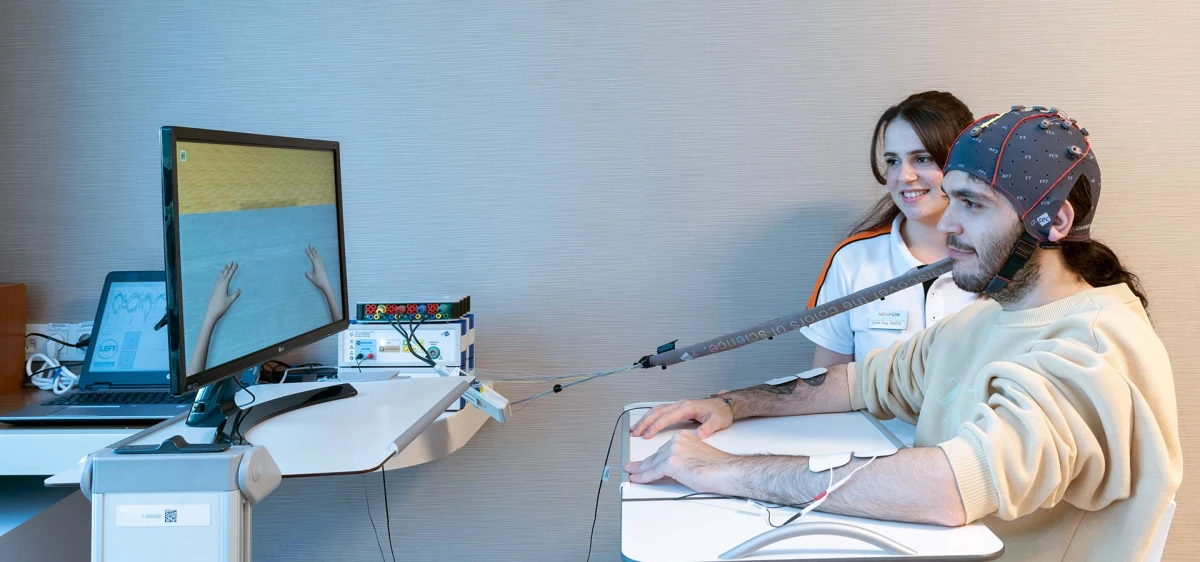
At Neur-on Clinic, mirror therapy is implemented as part of a comprehensive neurorehabilitation program.
- Individual and detailed assessment
- Goal-oriented planning
- Evidence-based application
- Integration with functional activities
Mirror therapy is not used as a standalone treatment. Instead, it is combined with exercise, functional training, and other neurorehabilitation methods, and is often applied as a preparatory (priming) therapy approach before functional training.
Scientific References
Rothgangel, A. S., & Braun, S. M. (2013). Mirror therapy: Clinical aspects and evidence-based application. NeuroRehabilitation.
Thieme, H., Mehrholz, J., Pohl, M., et al. (2018). Mirror therapy for improving motor function after stroke. Cochrane Database of Systematic Reviews.
Deconinck, F. J. A., Smorenburg, A. R. P., Benham, A., et al. (2015). Reflections on mirror therapy: A systematic review of the effect of mirror visual feedback on the brain. Restorative Neurology and Neuroscience, 33(5), 681–704.
Wen, X., Wang, X., Zhang, L., et al. (2022). Effects of mirror therapy on upper limb motor recovery in acute and subacute stroke: A meta-analysis. Clinical Rehabilitation.
Winstein, C. J., Stein, J., Arena, R., et al. (2016). Guidelines for Adult Stroke Rehabilitation and Recovery. Stroke.