The first cause of death in stroke patients is lung infections. The main cause of these infections is aspiration due to swallowing disorder. Aspiration-induced lung infections lead to the death of one third of patients after stroke. In addition, more than half of stroke patients have lung infections due to aspiration.
In stroke, swallowing function is impaired at the level of cortical, brainstem or cranial nerves depending on the lesion site and dysphagia occurs. Patients face complications of dysphagia such as malnutrition, dehydration, weight loss, aspiration and death. These complications increase the length of hospitalisation and the cost of hospitalisation. In addition, when dysphagia is not treated, the problems that may occur after the patient goes home increase the burden of carers and reduce the quality of life of patients by limiting their daily living skills. Early diagnosis and treatment of dysphagia in stroke patients not only reduces complications but also improves functional status and accelerates the recovery of swallowing. The fastest recovery period is the first 3 weeks after stroke. Therefore, in the treatment of post-stroke swallowing disorder, starting therapy quickly and effectively in the early period without waiting for the spontaneous recovery process will increase the recovery rate.
Dysphagia seen in patients with neurological causes such as stroke is usually a treatable disorder. The method applied in the treatment of swallowing disorders is swallowing therapy. The treatment of swallowing disorders is planned by the speech and language therapist depending on the cause, symptoms and type of swallowing disorder. In the treatment of swallowing disorders, different treatments are applied depending on the cause, symptoms and type of swallowing disorder. In the treatment of swallowing disorders after stroke, the importance of technological approaches as well as conventional methods is gradually increasing. This development plays a critical role in making treatment processes more effective and improving the quality of life of patients. The aim of technology is to make swallowing treatment more effective, safe and personalised. Both complementing the deficiencies of conventional treatments and providing innovative solutions to treatment with modern approaches make a great contribution to the treatment process. Technological methods accelerate the treatment process and increase the motivation of patients by supporting the rehabilitation of individuals with swallowing disorders. Integration of technology in the treatment of post-stroke swallowing disorder complements traditional treatment methods and offers a more comprehensive and effective approach. Such innovative solutions significantly increase the effectiveness of therapies while increasing patients' participation in treatment.
The highest neurological recovery after stroke occurs within the first 3 months after stroke onset. Great efforts are made to facilitate the treatment of post-stroke swallowing disorders, especially during this period. Therefore, determining the most effective treatment options for post-stroke dysphagia in the acute and subacute phases is of clinical importance, especially in inpatient stroke rehabilitation. Studies have shown that TMS, tDCS, which are non-invasive brain stimulation techniques that modulate the depolarisation of cortical neurons by triggering them with magnetic or electric fields, and NMES, which stimulates muscle fibres by activating the peripheral sensory system and increases muscle contractions and strength, are the most effective therapies for the treatment of post-stroke dysphagia in the acute and subacute stages.
Therefore, in a recent scientific study, we hypothesised that the use of both peripheral and central stimulation procedures may be more effective in the treatment of dysphagia after stroke compared to conventional therapy alone or any instrumental treatment method and tested this hypothesis. The results of our study showed that the application of instrumental therapies such as NMES and tDCS in combination with conventional therapy increased the effectiveness of the treatment and provided a more significant improvement. The most effective treatment results were obtained in the group in which NMES, tDCS and conventional treatment were applied together.
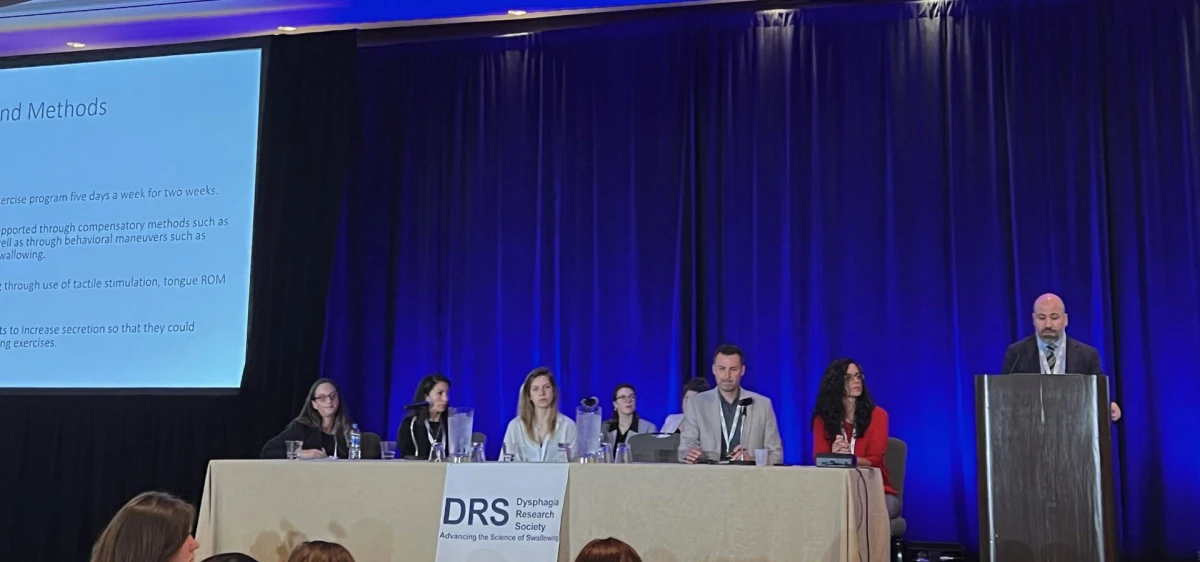
We presented the results of our study at the DRS Congress held in San Francisco, one of the world's most prestigious congresses in the field of dysphagia, and we were awarded with this study. In addition, the scientific article of our study was published in Dysphagia Journal, the most prestigious journal in the field of dysphagia.
Bibliography:
- Wijting, Y., Freed, M. (2013) Training Manual fort he use of Neuromuscular Electrical Stimulation in the treatment of Dysphagia, VitalStim Certification Programme, Provided by CIAO Seminars, 8-79.
- Hsiao, M.-Y., et al. (2023). Meta-analysis of rTMS effects on post-stroke dysphagia. Frontiers in Rehabilitation Neuroscience.
- Liao, Y., et al. (2017). The role of HF-TMS in improving swallowing functions. BMJ Open.
- Tan, W.-S., et al. (2022). Neurostimulation therapies for dysphagia: A systematic review. Journal of Stroke and Cerebrovascular Diseases.
- Bengisu, S., Demir, N. & Krespi, Y. Effectiveness of Conventional Dysphagia Therapy (CDT), Neuromuscular Electrical Stimulation (NMES), and Transcranial Direct Current Stimulation (tDCS) in Acute Post-Stroke Dysphagia: A Comparative Evaluation. Dysphagia39, 77-91 (2024). https://doi.org/10.1007/s00455-023-10595-w
Based on these results, we aimed to further develop our study and planned a new study by including TMS, one of the central methods. Thus, we aimed to examine the effects of NMES, tDCS and rTMS methods, which are accepted as the most effective treatment methods in the current literature, on the treatment of patients who need dysphagia treatment after stroke.