Technology-Assisted Stroke Rehabilitation
In recent years, technological advances have made a significant difference in stroke rehabilitation. In addition to traditional treatment methods, robotic devices and sensor-based technologies not only accelerate the recovery process but also make therapy more effective. Studies have shown that technology-assisted rehabilitation enhances neuroplasticity—the brain’s capacity to reorganize itself—and is more effective than conventional physical therapy in improving walking ability after stroke as well as arm and finger functions (1,2).
Benefits of Technological Rehabilitation After Stroke
Technological rehabilitation not only improves patients’ physical abilities but also makes the treatment process more engaging and motivating. Virtual reality games and goal-oriented exercises increase patient participation in therapy while simultaneously accelerating recovery. These modern approaches support patients in adapting more effectively to treatment and regaining independence in a shorter period of time (3).
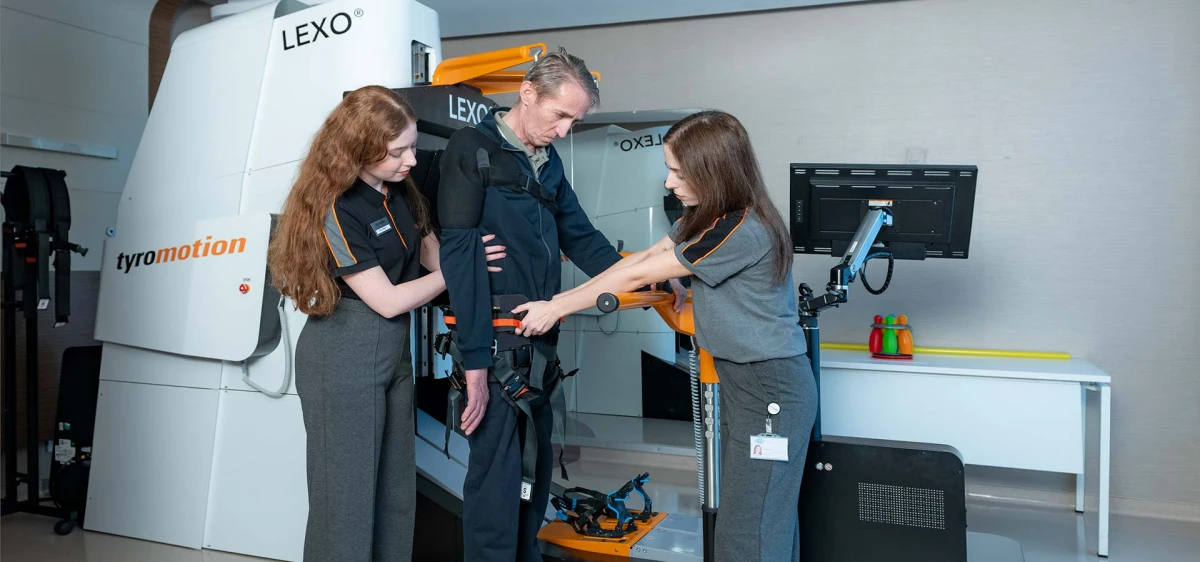
Robotic Rehabilitation with Tyromotion Technology
At our clinic, we aim to provide the best treatment options by integrating advanced technological approaches into rehabilitation. In particular, Tyromotion technology plays an important role in the rehabilitation process with its innovative solutions. Tyromotion offers robotic and sensor-based devices specifically designed for the rehabilitation of hand, arm, leg, and balance impairments after stroke. (4,5)
Technology-Based Stroke Rehabilitation
If you or your loved ones require treatment after a stroke, you can take a step forward in recovery with these powerful technological solutions.
References
- Mehrholz, Jan et al. “Electromechanical-assisted training for walking after stroke.” The Cochrane Database of Systematic Reviews, vol. 5,5 CD006185. 10 May 2017. doi:10.1002/14651858.CD006185.pub4
- Mehrholz, Jan et al. “Systematic review with network meta-analysis of randomized controlled trials of robotic-assisted arm training for improving activities of daily living and upper limb function after stroke.” Journal of NeuroEngineering and Rehabilitation, vol. 17,1 83. 30 Jun 2020. doi:10.1186/s12984-020-00715-0
- Calabrò, Rocco S. et al. “Robotic neurorehabilitation in patients with chronic stroke: psychological well-being beyond motor improvement.” International Journal of Rehabilitation Research, vol. 38,3 (2015): 219–225. doi:10.1097/MRR.0000000000000114
- Hotz, Isabella et al. “Robot-assisted gait training in patients with various neurological diseases: A mixed methods feasibility study.” PLOS ONE, vol. 19,8 e0307434. 27 Aug 2024. doi:10.1371/journal.pone.0307434
- Baldan, Francesca et al. “Robot-assisted rehabilitation of hand function after stroke: Development of prediction models for reference to therapy.” Journal of Electromyography and Kinesiology, vol. 57 (2021): 102534. doi:10.1016/j.jelekin.2021.102534